Jacob Wilson knew something had tangibly changed just six months into a clinical trial evaluating an innovative therapy that targets mitochondria, the energy producing structures inside cells.
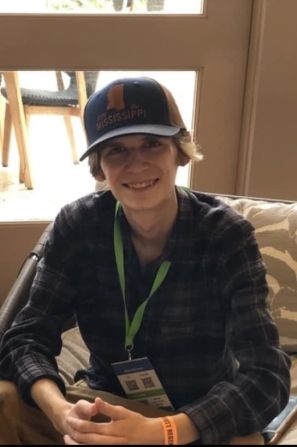
Jacob Wilson. Photo provided.
Diagnosed at 10 with Barth syndrome, an ultra-rare, life-threatening genetic mitochondrial disorder that primarily affects males, Wilson’s energy was too depleted, his muscles too weak to complete life’s simple tasks, like eating and walking. He never felt rested after a good night’s sleep, missed childhood developmental milestones, faced cardiac issues and was immunocompromised. In 2016, he participated in a clinical trial evaluating the efficacy of elamipretide, a first-in-class drug that targets mitochondria, to help boost energy production. At first, Wilson got winded after walking a block. Six months later, he was outpacing his parents. And he gained 25 pounds in a year.
“The medication was absolutely amazing,” said Wilson, now 25, from Braxton, Miss. “That medicine made me a new person, a night and day difference, like a light switch. And I’m not saying that it’s a cure, but it’s something vital.”
In September, the U.S. Food and Drug Administration formally approved elamipretide as a treatment for Barth syndrome under an expedited process for rare diseases. The achievement is the realization of a two-decade-long drug discovery journey that began with a groundbreaking discovery by pharmacologist Dr. Hazel Szeto, M.D., Ph.D. ’77, at Weill Cornell Medicine, who discovered the compound that became elamipretide and was the scientific founder of a biotechnology company to commercialize it.
Elamipretide is the first compound discovered at Weill Cornell Medicine to attain FDA approval; it will be available on the market starting this month under the brand name Forzinity to improve muscle strength in adults and children weighing at least 30kg with Barth syndrome.
“This is a monumental accomplishment for Dr. Szeto and Weill Cornell Medicine,” said Dr. Lisa Placanica, senior managing director of the Center for Technology Licensing at Weill Cornell Medicine. “Navigating the long journey through the drug discovery pathway and reaching this incredible milestone required the commitment of numerous institutional, investor, patient advocate and commercial stakeholders. We extend our profound congratulations to Dr. Szeto for her tireless efforts.”
“I went to medical school, but I chose not to practice,” Dr. Szeto said. “And I figured, one day, I would invent a drug that would then be able to reach far more patients than I would be able to singlehandedly treat in an office. So, this is my dream come true.”
An Unconventional Discovery
It was by happenstance that Dr. Szeto in 2004 discovered that a water-soluble chain of four amino acids penetrated cells and targeted mitochondria. The peptide revealed a novel mitochondrial target (cardiolipin) and a completely new mechanism of action, and after galvanizing scientific expertise from around the world, Dr. Szeto and a collaborator from Montreal Clinical Research Institute, Dr. Peter Schiller, discovered a first-in-class compound that had mitochondrial therapeutic potential.
Dr. Szeto conducted preclinical studies advancing the compound and, in 2006, founded Stealth Peptides, now known as Stealth BioTherapeutics—at a time when faculty entrepreneurship wasn’t common or actively supported—to bring the compound into clinical development.
Weill Cornell Medicine Enterprise Innovation, which bridges academic research and industry collaboration to bring scientific discoveries to market, filed the original patent applications and worked with the U.S. Patent and Trademark Office to protect Dr. Szeto’s intellectual property. Enterprise Innovation also worked with Stealth to license the compound and monitor its clinical development.
“Drs. Szeto and Schiller’s discovery of small peptides targeting mitochondria was an exciting first step in understanding the potential to target mitochondrial dysfunction,” said Reenie McCarthy, CEO of Stealth BioTherapeutics. “The discovery, which we licensed from Cornell in 2006, gave us a starting point for nonclinical and clinical development, and ultimately helped open the door to this emerging field of mitochondrial medicine.”
Patient Advocacy Key to Development and FDA Approval
After the company launched, Stealth engaged in nonclinical studies to characterize elamipretide’s safety and efficacy profile, followed by clinical trials to evaluate the same in humans, McCarthy said. Then, in 2014, members of the Barth syndrome community approached Stealth with interest in its drug candidate as a possible therapy. Stealth and the Barth syndrome community partnered throughout the drug development efforts, McCarthy said.
Barth syndrome is an inherited condition characterized by mitochondrial dysfunction that leads to muscle and heart weakness; growth delays; exercise intolerance; extreme fatigue; neutropenia; feeding problems; and death. Some 150 known people in the United States and less than 500 worldwide live with Barth syndrome. There were previously no FDA-approved treatments for Barth syndrome.

Jacob Wilson in front of the U.S. Capitol building. Photo provided.
Wilson was one of 12 people to participate in a clinical trial evaluating elamipretide’s therapeutic potential, he said. The trial, called TAZPOWER, was a randomized, double-blind, placebo-controlled crossover study and open-label extension to assess the safety and efficacy of elamipretide in patients with Barth syndrome.
During the first part of the study, six patients were randomized to elamipretide and six were randomized to the placebo for 12 weeks, after which point participants were removed from both for four weeks. Then participants switched to the opposite treatment arm for another 12 weeks. During the second part of the study, 10 patients who elected to participate received elamipretide for up to 196-weeks to assess long term safety and efficacy.
Stealth, alongside Barth syndrome patient advocates, began meeting with the FDA in 2019 to discuss the clinical trial data and regulatory next steps. Given the many challenges with ultra-rare disease drug development, it was not until this year that the FDA completed its formal review and approved Stealth’s new drug application for elamipretide.
Through it all, the Barth syndrome community fiercely advocated for the drug’s approval. Wilson shuttled between Mississippi and Washington, D.C. to attend FDA advisory board meetings and meet with U.S. senators and representatives on Capitol Hill.
Finally, at the FDA’s recommendation, Stealth in August applied for approval under the accelerated approval pathway, an expedited process for rare diseases that requires Stealth to complete a post-marketing trial to confirm clinical benefit. Approval came a month later.
“We had to fight, but it was worth it,” Wilson said. “I’m very grateful for this medicine, but that wasn’t my objective for the eight, nine years I was advocating. This is for the next generation of people who will need the help.”
For Dr. Szeto, FDA approval is the culmination of a 20 year journey that now has direct patient impact.
“There’s nothing like seeing it actually help people,” she said, “making that giant leap from this little white powder that was created at the bench in the E building into a therapeutic that can go into a human. It’s been very meaningful.”